
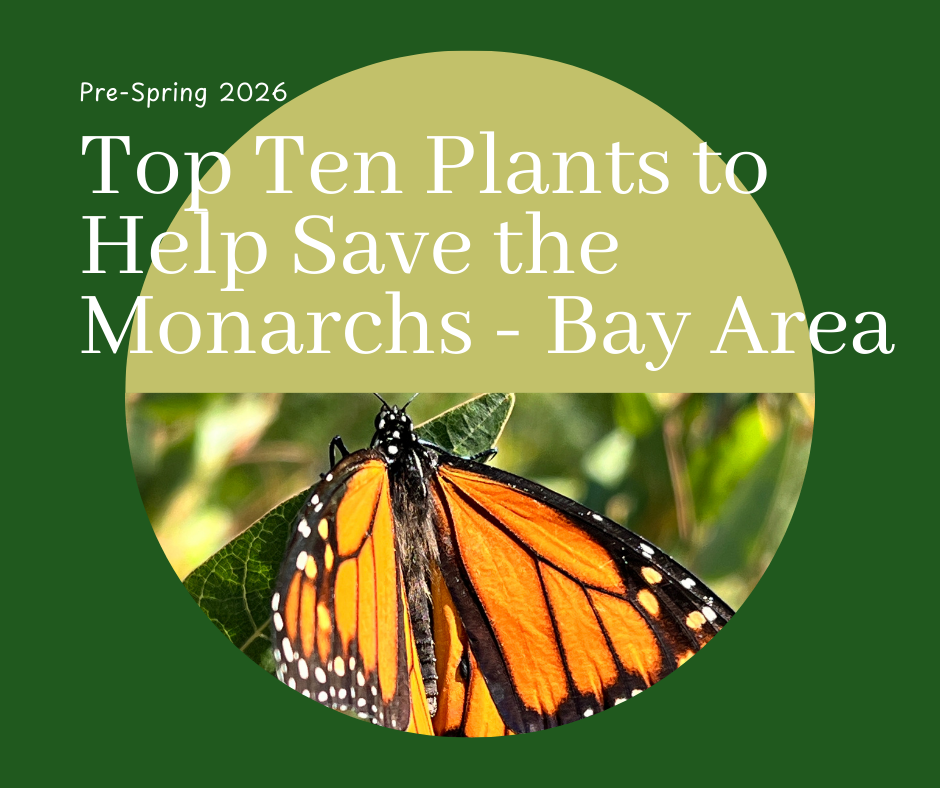
The endangered monarch butterfly needs your help.
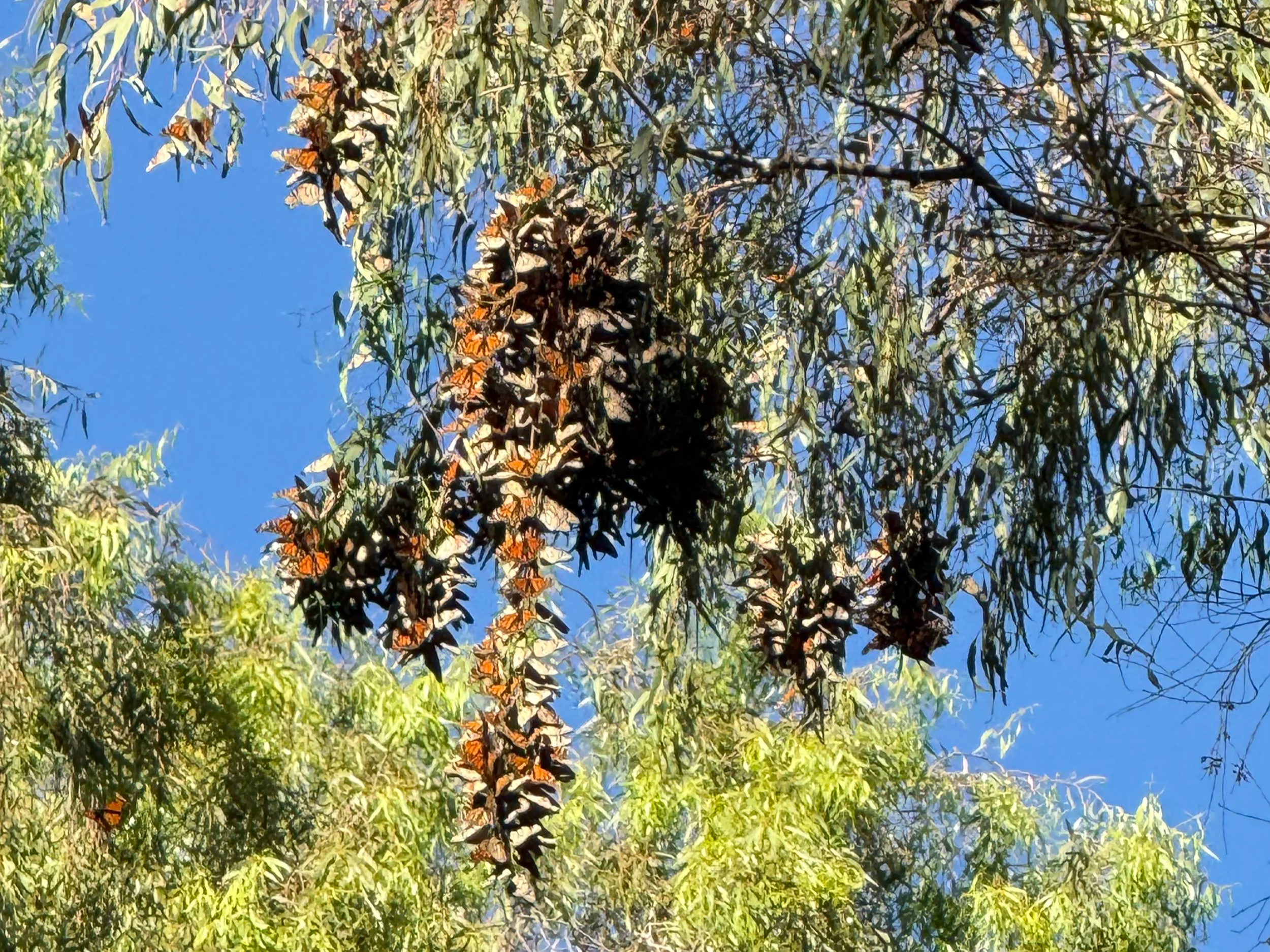
Monarchs clustered together in Eucalyptus at an overwintering site.
Since the 1980s, the Western monarch population has seen a decline of more than 95%.
If you’re a California resident, you’re likely aware that Western monarchs rely on California ecosystems for feeding, breeding, and overwintering. Maybe you’ve visited Carmel or other sites along the Pacific Coast and have seen the beautiful clumps of black and orange monarchs rustling in the trees; or maybe you have been following the Western monarch count each year.
The decline of the monarch butterfly population is an ecological crisis, but there’s good news: there’s a lot YOU can do to help change the fate of the Western monarch.
The Xerxes Society has outlined an action plan (Western Monarch Call to Action) to help save the monarchs. First on the list is restoring monarch breeding and migratory habitat, something you can do from the comfort of your own home! If you have no idea what to plant, you’re in the right place — read on to learn our top ten expert-vetted planting suggestions to support the Western monarch.
To place an order for these plants, please visit, call, or email our nursery.
MILKWEED
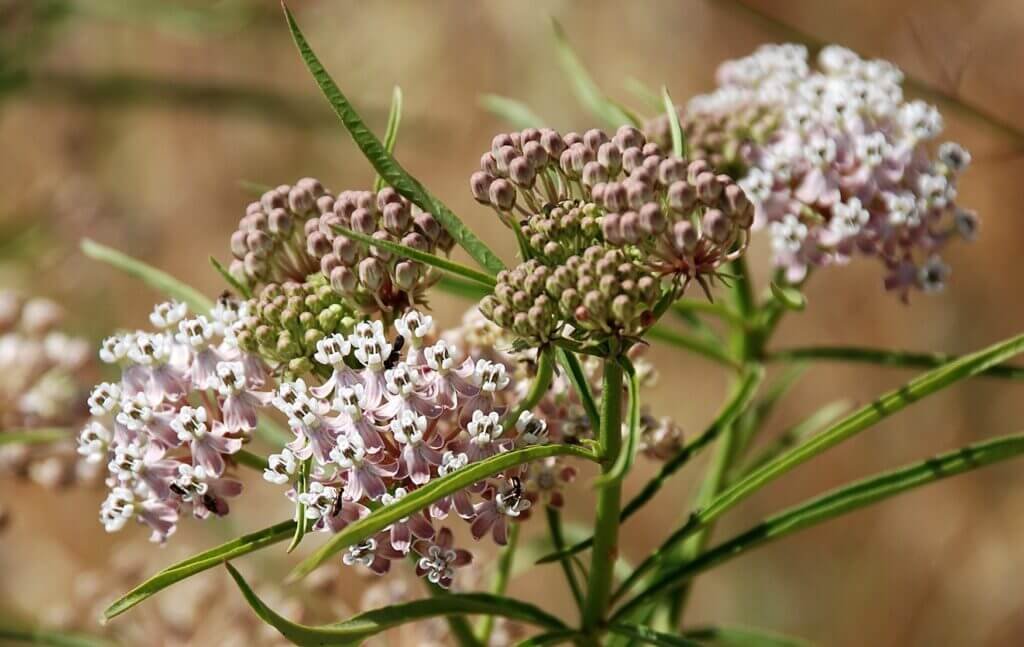
Asclepias fascicularis - Narrowleaf Milkweed (source: online)
Asclepias fascicularis - Narrow Leaf Milkweed
Asclepias speciosa - Showy Milkweed
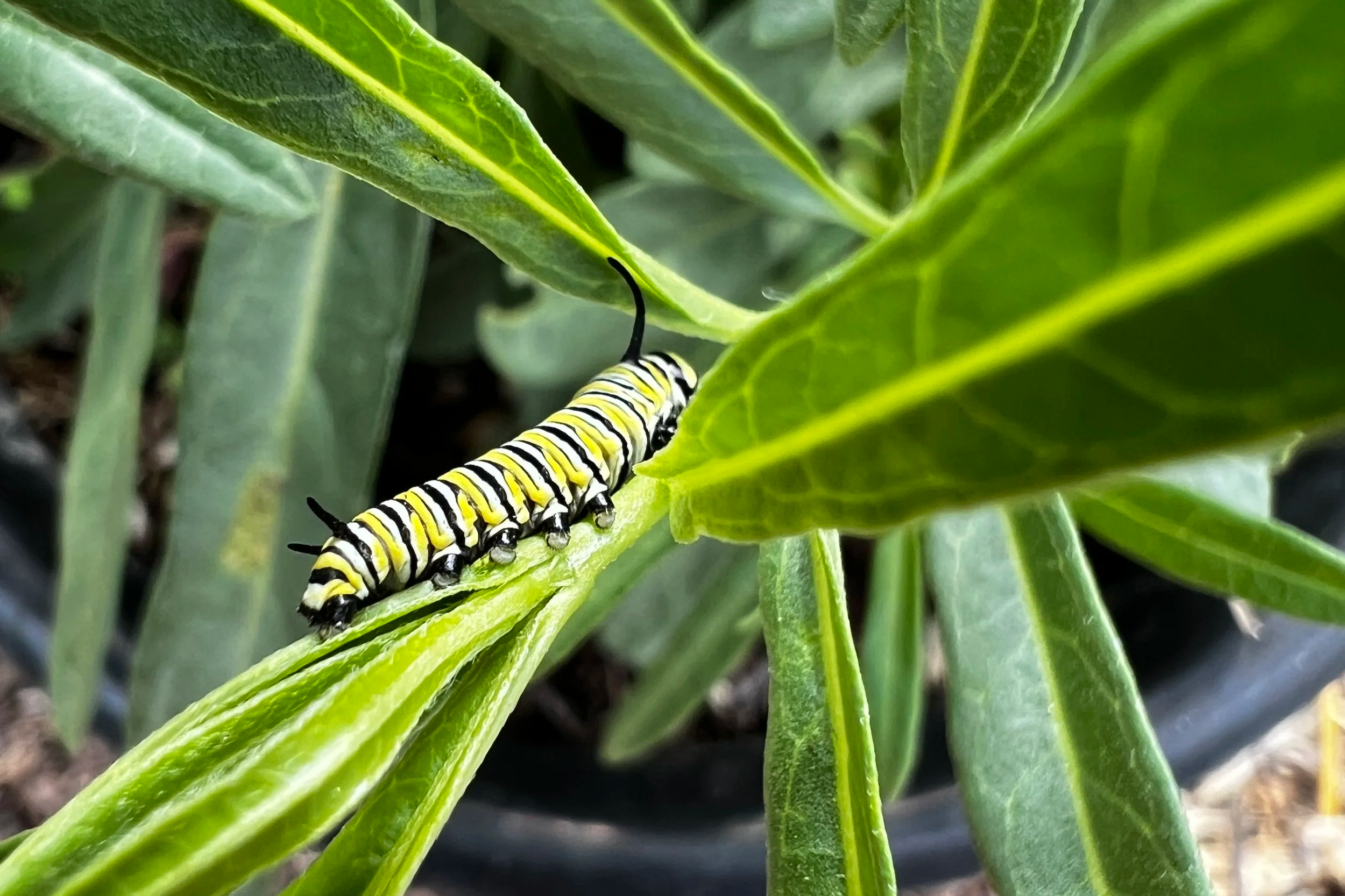
You may not know that the milkweed plant population is also down over 90%. Monarchs rely on milkweed for breeding and sustenance: they lay their eggs on the plant, and when the eggs hatch, the caterpillars eat the milkweed leaves.
In fact, milkweed is the ONLY plant that monarch caterpillars will eat. When the caterpillars grow large enough, they then form a chrysalis on the milkweed or an adjacent plant, inside of which they begin the miraculous process of transforming into an adult monarch butterfly.
As saveourmonarchs.org explains, “Monarch caterpillars need the milkweed plants to grow into monarch butterflies. No milkweed, no monarchs. It’s that simple.”
“No milkweed, no monarchs. It’s that simple.”
- SaveOurMonarchs.org
To best support butterflies (and make your plantings look intentional), plant clumps of 4-6 plants all together. Otherwise, the baby caterpillars run out of food and cannot survive.
You should always plant milkweed native to your area. You can use the search function at Calscape to find species appropriate to plant near you. Our nursery carries two species native to the Bay Area, A. fascicularis and A. speciosa. (Currently, we have fascicularis in stock; in spring we will have loads of both species. Please note these are dormant in the winter and may not look like much, but they are very much alive underneath the soil!)
TIP: the only place you shouldn’t plant milkweed is near overwintering sites. Doing so “can alter monarch behavior and increase disease risk,” according to the Xerxes Society. Overwintering trees and shrubs, or nectar plants (food for adult butterflies), are a better choice in these areas. (How do I know if I’m near an overwintering site?)
🚫 Milkweeds to avoid: Tropical milkweed, Asclepias curassavica, while readily available in many nurseries, can actively harm the monarchs by messing with their breeding cycles. It can also harbor parasites that are dangerous to the monarch.
NECTAR PLANTS
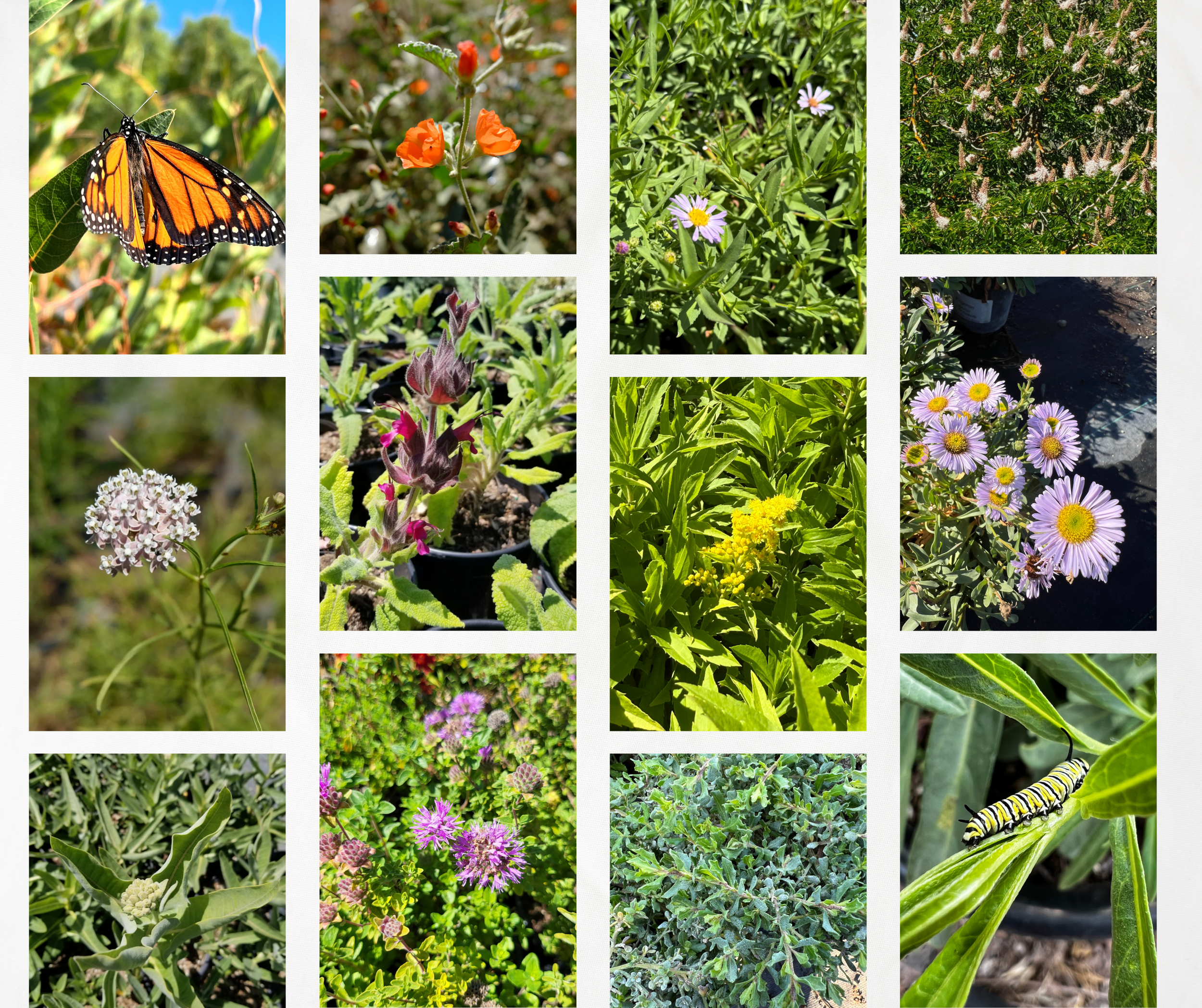
Top row, L to R: Monarch butterfly; Sphaeralcea ambigua (Desert Mallow); Aster chilensis (Pacific Aster); Aesculus californica (California buckeye) in bloom. Middle row, L to R: Asclepias fascicularis (Narrowleaf Milkweed); Salvia spathacea (Hummingbird Sage); Solidago (Goldenrod); Erigeron glaucus (Seaside Daisy). Bottom row, L to R: Asclepias speciosa (Showy Milkweed); Monardella villosa (Coyote Mint); Baccharis ‘Twin Peaks’ (Coyotebrush); Monarch caterpillar.
Adult monarchs need food year-round.
Nectar plants support the monarchs throughout the year, not just in breeding season. Just as with milkweed, it is helpful to plant multiples of each plant to attract the butterflies, who can more easily spot clusters of plants when flying by.
Baccharis spp. (Coyotebrush)
Supports monarchs year round. This shrub or small tree is easy to grow and also supports many other pollinators and beneficial insects. All native Baccharis varieties are thought to be attractive to Monarchs.
Aesculus californica (California buckeye)
A very cool shrub or small tree with large, stunning white flower clusters. It does well in poor soils, just like Salvia (below) and is a great choice to support monarchs in the spring months. Please note, the seeds are toxic!
Salvia (Sages)
Wonderful choices for spring to summer monarch support. There are many varieties to choose from and all are drought-tolerant once established. They also support native bees! All native Salvia varieties are thought to be attractive to Monarchs.
Sphaeralcea ambigua (Desert Mallow)
A beautiful orange-blooming shrub that supports monarchs spring to fall. The flowers are little and cup-shaped and very pretty.
Monardella villosa (Coyote Mint)
A smaller, purple-blooming perennial that supports monarchs throughout the summer months.
Aster chilensis aka Symphyotrichum chilense (Pacific Aster)
A sweet little purple blooming daisy-like perennial that is a great choice for summertime monarch support. It has a fibrous root system that can help stabilize slopes or assist with erosion control.
Solidago spp. (Goldenrod)
A great late-season, summer-into-fall choice to support not only monarchs but also a wide variety of other pollinators and beneficial insects. All native Solidago varieties are thought to be attractive to Monarchs.
Erigeron glaucus (Seaside Fleabane or Seaside Daisy)
Supports monarchs winter to summer. It also attracts bees and other beneficial insects, according to the Xerxes Society.
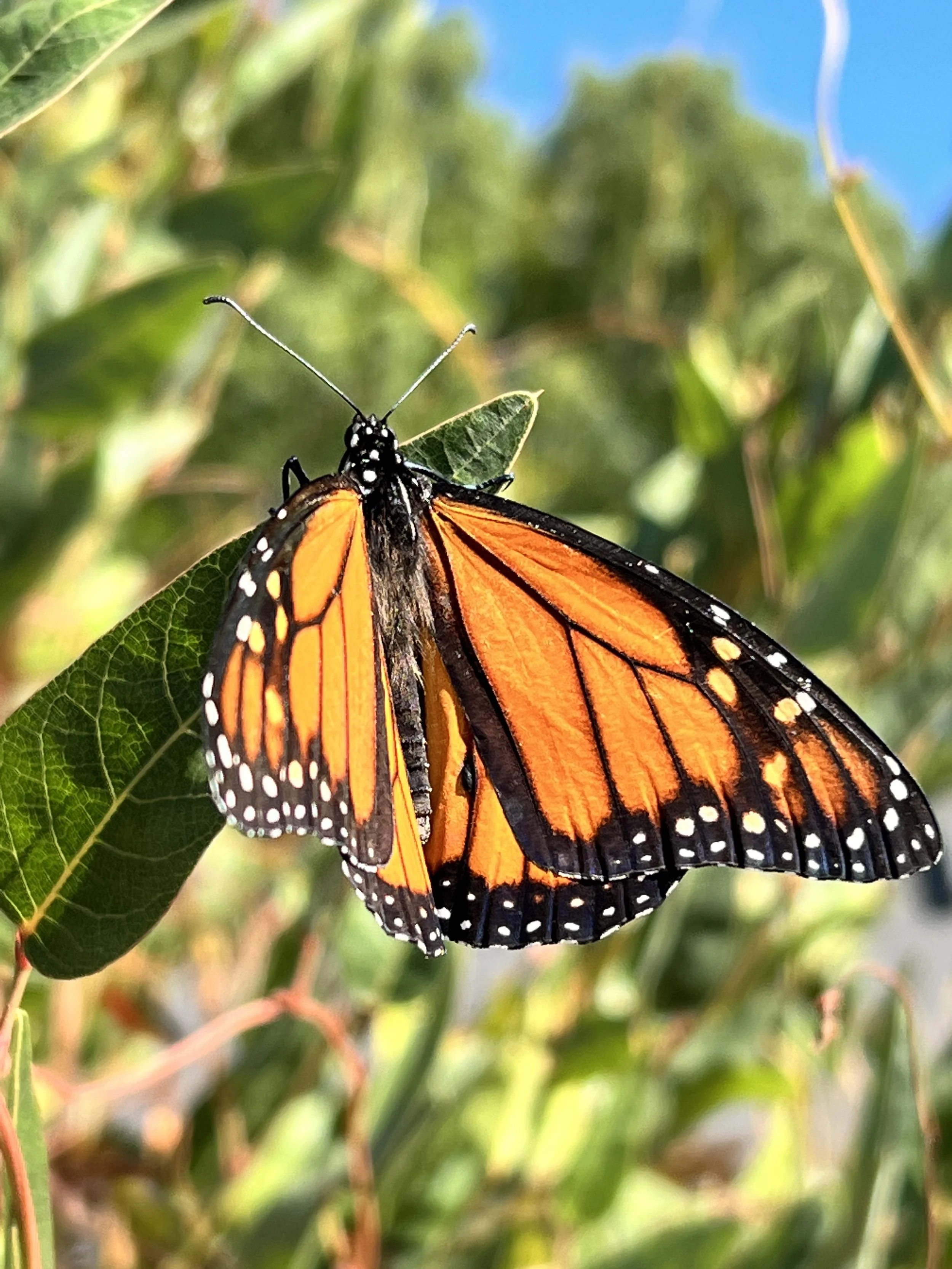
The beautiful, endangered Western monarch butterfly
WHAT ELSE YOU CAN DO
It’s also important when planting for pollinators to avoid pesticides, which can damage or even kill the insects visiting their flowers. Avoid insecticides entirely in and near pollinator gardens, and apply herbicides selectively “only to control noxious weeds,” as per the Monarch Joint Venture; also avoid untimely mowing.
As best you can, ensure that the milkweed seeds and plants you source are neonicotinoid-free. These pesticides cause extreme harm to pollinators.
You can also get involved in volunteer organizations dedicated to saving the monarchs such as the Save Our Monarchs Foundation. Learn more about planting native to support the monarchs and share your knowledge with friends, family, and neighbors!
LINKS
Links Referenced in this article:
Xerxes Society Western Monarch Call to Action: https://xerces.org/western-monarch-call-to-action
Western Monarch Count: https://westernmonarchcount.org/
Calscape Milkweed Zip-Code-Filterable Search: https://calscape.org/search/?plant=Asclepias%20(Genus)
Monarch Nectar Plants California (PDF): chrome-extension://efaidnbmnnnibpcajpcglclefindmkaj/https://xerces.org/sites/default/files/publications/19-046_02_MNPL_CA_web-screen.pdf
Common Overwintering Trees and Shrubs (for overwintering-adjacent locations): chrome-extension://efaidnbmnnnibpcajpcglclefindmkaj/https://westernmonarchcount.org/wp-content/uploads/2025/03/Common-Overwintering-Trees-in-California-2025.pdf
Map of Overwintering Sites: https://westernmonarchcount.org/map-of-overwintering-sites/
Monarch Joint Venture - Create Habitat for Monarchs: https://monarchjointventure.org/get-involved/create-habitat-for-monarchs
New Study: Neonicotinoids Found to Drive Butterfly Decline More Than Any Other Environmental Variable: https://abcbirds.org/news/new-study-neonicotinoids-found-to-drive-butterfly-declines-more-than-any-other-environmental-variable/
Additional links:
Monarch Nectar Plants for California: https://www.gardenia.net/guide/monarch-nectar-plants-for-northern-california
The Xerxes Society: xerxes.org
Save Our Monarchs Foundation: https://www.saveourmonarchs.org/
Monarch Joint Venture: https://monarchjointventure.org/
