
Fall-Blooming California Natives
Fall is the ideal time to plant California natives. Cooler temperatures and seasonal rains give new plants a chance to establish strong root systems before the heat of summer arrives. Planting in fall can also mean less watering, less transplant stress, and better long-term success in the landscape.
Once established, many California natives are well adapted to our local climate, support birds and pollinators, and can thrive with less supplemental water than many traditional landscape plants.
Plus: planting in fall doesn’t mean giving up on flowers! Many California natives are still blooming well into the season, bringing fresh color to the landscape while providing valuable late-season food for pollinators. Here are some of our favorite fall-blooming California natives to look for:
Epilobium canum — California Fuchsia
Bloom: July–November
Flower color: Red to orange-red
Light: Full sun
Water: Low
California native: Yes
Wildlife: Excellent for hummingbirds; also attracts bees.Symphyotrichum chilense — California Aster
Bloom: July–October
Flower color: Lavender to purple
Light: Full sun to part shade
Water: Low to moderate
California native: Yes
Wildlife: Attracts bees and butterflies.Solidago velutina ssp. californica — California Goldenrod
Bloom: July–October
Flower color: Golden yellow
Light: Full sun
Water: Low
California native: Yes
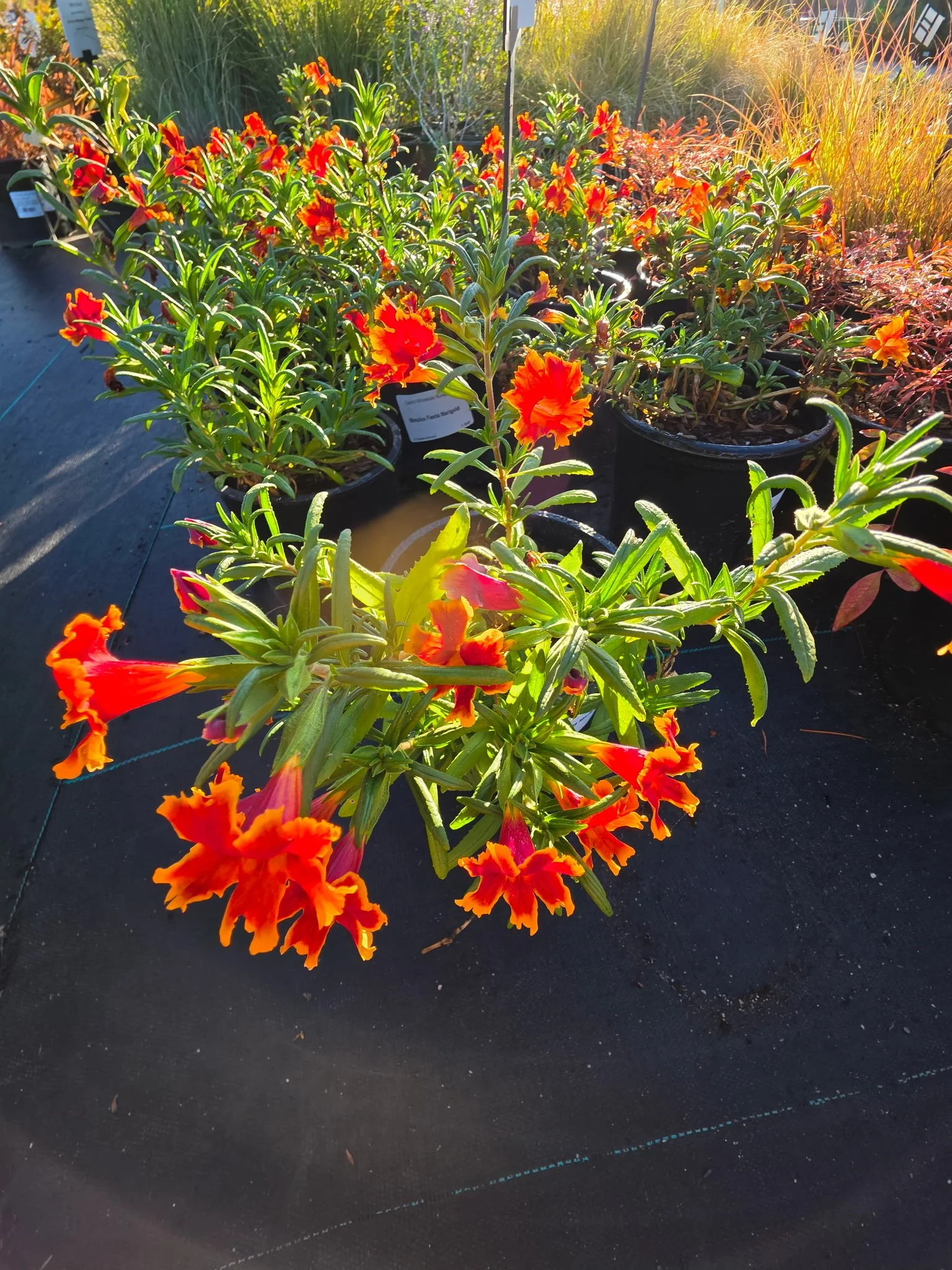
Wildlife: Excellent late-season plant for bees, butterflies and other beneficial insects.Diplacus aurantiacus (Mimulus aurantiacus) — Sticky Monkeyflower
Bloom: Spring–fall
Flower color: Orange, yellow, red, or cream
Light: Full sun to part shade
Water: Very low to low
California native: Yes
Wildlife: Attracts hummingbirds, native bees, butterflies, and other pollinators.Eriogonum fasciculatum — California Buckwheat
Bloom: May–October, sometimes later
Flower color: White to cream, aging pink/rust
Light: Full sun
Water: Very low
California native: Yes
Wildlife: Outstanding habitat and food source for bees, butterflies and other beneficial insects.Eriogonum grande var. rubescens — Red Buckwheat
Bloom: Summer–fall
Flower color: Rosy pink to red
Light: Full sun
Water: Low
California native: Yes
Wildlife: Attracts butterflies, bees and other pollinators.Baccharis pilularis — Coyote Brush
Bloom: August–December
Flower color: Creamy white
Light: Full sun to part shade
Water: Very low once established
California native: Yes
Wildlife: Exceptionally valuable late-season plant for native bees and beneficial insects.Galvezia speciosa ‘Firecracker’ — Island Snapdragon
Bloom: Spring–fall
Flower color: Bright red
Light: Full sun to part shade
Water: Low
California native: Yes
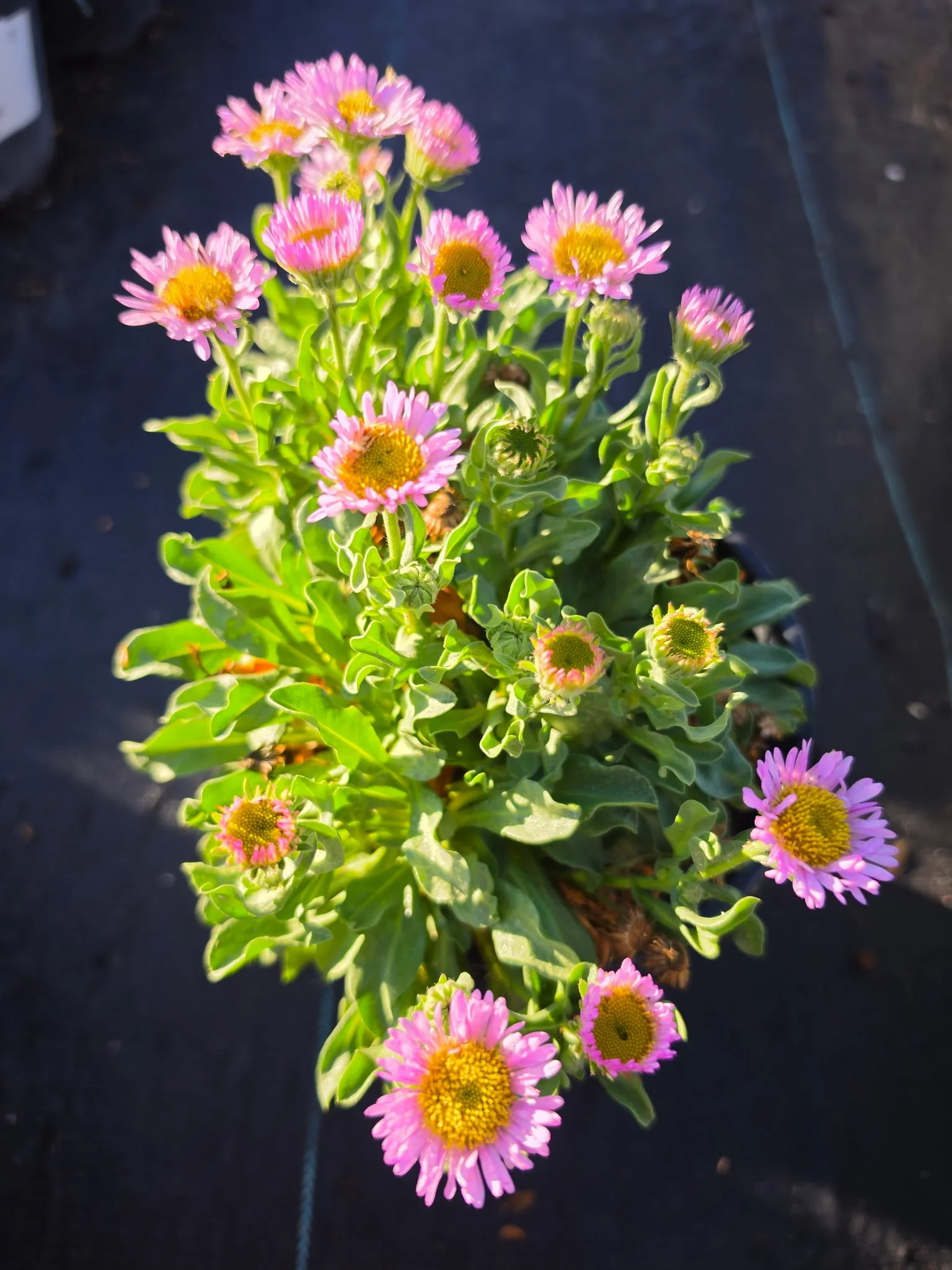
Wildlife: Attracts hummingbirds and other pollinators.Erigeron glaucus — Seaside Daisy
Bloom: Spring–fall
Flower color: Lavender, purple or pink with yellow centers
Light: Full sun to part shade
Water: Low
California native: Yes
Wildlife: Attracts native bees, butterflies and other pollinators.Ribes malvaceum — Chaparral Currant
Bloom: Approximately October–March
Flower color: Pink
Light: Full sun to part shade
Water: Low
California native: Yes
Wildlife: Flowers attract hummingbirds; fruit provides food for birds and other wildlife.
Fall-Blooming Landscape Plants / ornamentals (not native, but do well in Bay Area climates)
Whether you’re planning a new planting or just looking to add a little more seasonal color, all plants on this list are great choices for keeping the landscape lively well into fall. The below plants, while not California natives, flower in autumn and do very well in our Bay Area climate:
Salvia leucantha — Mexican Bush Sage
Bloom: Late summer–fall
Flower color: Purple and white
Light: Full sun
Water: Low to moderate
California native: No
Wildlife: Excellent for bees, butterflies and hummingbirds.Salvia greggii — Autumn Sage
Bloom: Spring–fall
Flower color: Red, pink, white, purple and other colors depending on cultivar
Light: Full sun
Water: Low
California native: No
Wildlife: Highly attractive to hummingbirds and bees.Salvia × jamensis — Autumn Sage Hybrids
Bloom: Spring–fall
Flower color: Many colors depending on cultivar
Light: Full sun
Water: Low
California native: No
Wildlife: Attracts hummingbirds, bees and butterflies.Salvia ‘Hot Lips’ — Hot Lips Sage
Bloom: Spring–fall
Flower color: Red and white
Light: Full sun
Water: Low
California native: No
Wildlife: Excellent hummingbird and bee plant.Salvia ‘Amistad’ — Amistad Sage
Bloom: Summer–fall
Flower color: Deep purple
Light: Full sun
Water: Moderate
California native: No
Wildlife: Highly attractive to hummingbirds, bees and butterflies.Leonotis leonurus — Lion’s Tail
Bloom: Summer–fall
Flower color: Bright orange
Light: Full sun
Water: Low once established
California native: No
Wildlife: Attracts hummingbirds, bees and butterflies.Russelia equisetiformis — Firecracker Plant
Bloom: Spring through fall and potentially longer in mild climates
Flower color: Red
Light: Full sun to part shade
Water: Low to moderate
California native: No
Wildlife: Particularly attractive to hummingbirds.Erigeron karvinskianus — Santa Barbara Daisy
Bloom: Spring–fall
Flower color: White flowers aging to pink
Light: Full sun to part shade
Water: Low
California native: No
Wildlife: Attracts bees and butterflies.Verbena bonariensis — Tall Verbena
Bloom: Summer–fall
Flower color: Purple
Light: Full sun
Water: Low to moderate
California native: No
Wildlife: Excellent butterfly and pollinator plant.Oenothera lindheimeri — Gaura
Bloom: Spring–fall
Flower color: White to pink
Light: Full sun
Water: Low
California native: No
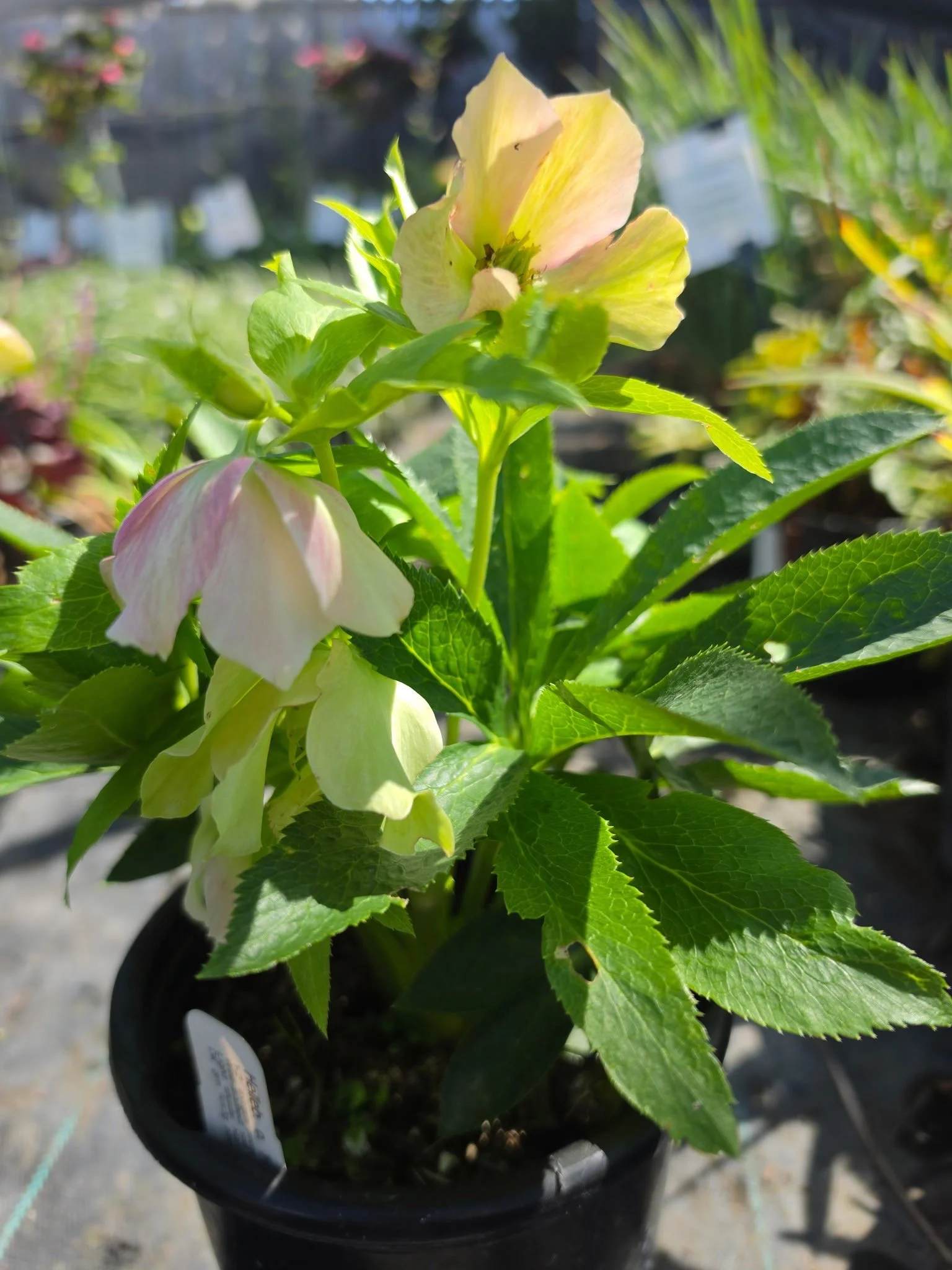
Wildlife: Attracts bees, butterflies and other pollinators.Helleborus spp. — Hellebore
Bloom: Fall–spring
Flower color: White, pink, purple, green, burgundy, or bi-colored
Light: Part shade to shade
Water: Moderate
California native: No
Wildlife: Early-season flowers provide nectar and pollen for bees and other pollinators.Anisodontea spp. — Cape Mallow
Bloom: Long flowering season, including fall in mild Bay Area climates
Flower color: Primarily pink
Light: Full sun
Water: Low to moderate
California native: No
Wildlife: Attractive to bees and other pollinators.Abutilon spp. and hybrids — Flowering Maple
Bloom: Much of the year in mild climates, including fall
Flower color: Red, orange, yellow, pink and other colors
Light: Part shade to sun depending on variety and location
Water: Moderate
California native: No
Wildlife: Excellent hummingbird plant.Correa spp. — Australian Fuchsia
Bloom: Fall–spring, depending on species and cultivar
Flower color: Pink, red, white and combinations
Light: Full sun to part shade
Water: Low once established
California native: No
Wildlife: Tubular flowers attract hummingbirds.Arbutus unedo — Strawberry Tree
Bloom: Fall–winter
Flower color: White to pale pink
Light: Full sun to part shade
Water: Low once established
California native: No
Wildlife: Flowers support pollinators; strawberry-like fruits provide food for birds.
Please note: Bloom periods are approximate. Timing can vary throughout the Bay Area depending on microclimate, temperature, irrigation, pruning, cultivar, and weather.
